
Weird Things You Didn’t Know Are Affecting Your Lymphatic System: Heat & Humidity
Written by: Haley Kallas, LMT 147800, MLD-C
If you joined us at Rooted Birth’s recent perinatal support group, this series may sound familiar! Our conversation about some of the surprising things that can affect the lymphatic system inspired Haley to keep it going here.
Welcome to Weird Things You Didn’t Know Are Affecting Your Lymphatic System.
Have you ever noticed that your feet, ankles, or hands feel a little puffier after spending a hot summer day outside?
And if you live in San Antonio, you know we're not exactly strangers to heat and humidity.
You may be surprised to learn that both can influence your body's fluid balance, and create a little extra work for your lymphatic system.
But here's the interesting part: swelling in the heat doesn't necessarily mean your lymphatic system isn't working properly. Heat can simply increase the amount of fluid moving into your tissues, which means your lymphatic system has more fluid to manage.
So, what's actually happening underneath the surface?
Heat Changes How Fluid Moves
When you're hot, your blood vessels naturally widen to help your body release heat. This is called vasodilation.
That process can also increase the amount of fluid moving from your blood vessels into the surrounding tissues. Your lymphatic system then helps collect that excess fluid and eventually return it to your bloodstream.
When there's more fluid entering the tissues than can be moved out at that moment, you may notice some temporary swelling.
Hello, puffy summer ankles.
And Then There's Humidity...
Humidity makes things even more interesting.
Sweating is one of the ways your body cools itself, but that cooling happens largely when sweat evaporates from your skin.
When the air is already full of moisture, (looking at you, Texas summer) sweat doesn't evaporate as efficiently. Your body may stay warmer for longer, which can prolong some of those normal responses to heat.
Humidity isn't physically “blocking” your lymphatic system. Instead, heat + humidity can create conditions where swelling becomes more noticeable.
Don't Forget About Hydration
Of course, hot weather usually means more sweating, too.
As you sweat, you're losing water and electrolytes. If you're not replacing what you're losing, dehydration can affect your body's normal circulation and fluid balance.
Drinking water isn't going to “flush out” your lymphatic system, but adequate hydration is still an important part of supporting the processes your lymphatic system relies on.
And if you've read my post about hydration and your lymphatic system, you already know I have plenty to say about this one.
Heat + Gravity = Heavy Legs
Now add gravity to the equation.
If you've spent a hot day standing, sitting, walking around outside, or chasing kids at the park, you may notice that your feet and ankles feel heavier or puffier by the end of the day.
Heat has increased blood flow toward the skin, gravity is encouraging fluid toward your lower extremities, and your body is working to move all of that fluid back up.
This is where simple movement can help.
Walking, ankle pumps, or calf raises activate the muscles of your lower legs and support both venous circulation and lymphatic fluid return.
Sound familiar? We talked about this in Gravity & Your Lymphatic System, too.
What If You Already Have Lymphedema?
For someone living with lymphedema or compromised lymphatic function, hot weather may make existing symptoms more noticeable.
If lymphatic transport is already limited, that additional fluid entering the tissues can contribute to more swelling, heaviness, tightness, or discomfort.
That doesn't necessarily mean the heat is damaging your lymphatic system. It may simply mean the additional fluid is asking more of a system that already has a reduced transport capacity.
If you have diagnosed lymphedema, continue following the compression and self-care recommendations provided specifically for you.
So, What Can You Do on a Hot Day?
Nothing revolutionary here, and that's kind of the point.
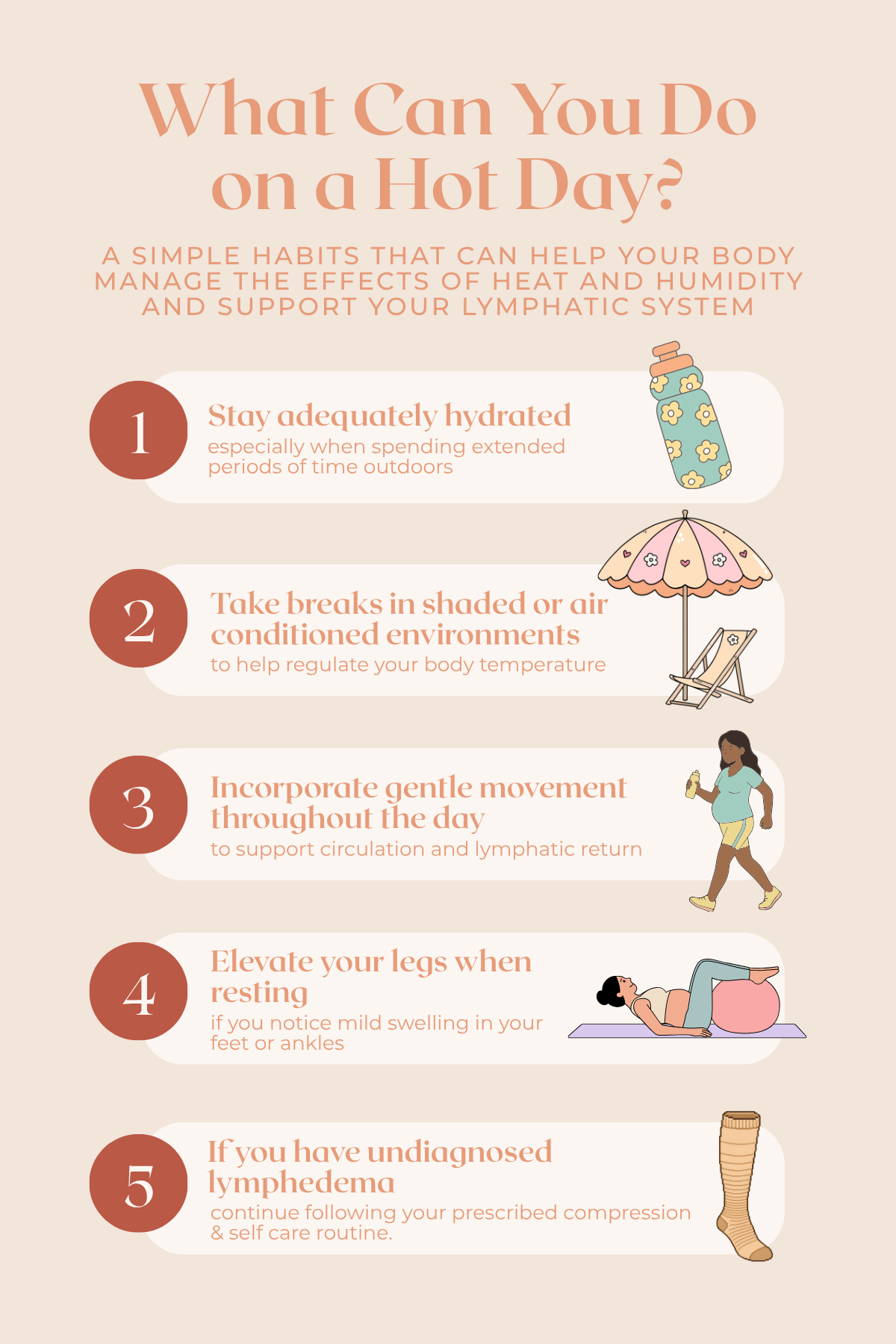
Stay adequately hydrated. Take breaks from the heat when you can. Keep your body moving instead of sitting or standing in one position for hours. If your feet or ankles feel mildly swollen at the end of the day, putting your feet up for a while may feel good too.
Your lymphatic system doesn't necessarily need a complicated “detox.” Sometimes it just needs you to work with your body instead of against it.
The Takeaway
Your lymphatic system is constantly working behind the scenes to help maintain your body's fluid balance.
Heat and humidity can change that balance. More fluid may move into your tissues, your body has to work harder to regulate its temperature, and gravity can make that fluid especially noticeable in your hands, feet, and ankles.
So if your ankles look a little puffier after a September afternoon in San Antonio, it doesn't automatically mean something is wrong with your lymphatic system.
It may simply have a little more work to do.
And understanding why that's happening gives you a few simple ways to support your body through it.
One important note: New, persistent, painful, or one-sided swelling shouldn't automatically be blamed on the weather. Sudden swelling accompanied by chest pain or shortness of breath requires immediate medical attention.
Curious About Manual Lymphatic Drainage?
Haley offers Manual Lymphatic Drainage at Nurture Massage Therapy in San Antonio, with a special focus on supporting women through pregnancy, postpartum, and motherhood.